


SoundHound - Music Discovery
SoundHound Inc.
I first reached for SoundHound when I wanted to identify a song quickly, but its real test came later: would it remain useful after the first week of recognizing tracks? My experience is that it has a stronger chance than many music-discovery apps because it combines song identification with discovery tools and a voice-controlled player. That combination makes it more than a button I open only when a mystery song appears.
SoundHound is a free Music & Audio app from SoundHound Inc., available for Android and iOS users who meet its Teen content rating. It has been around since June 15, 2010, and its current Android version is 10.5.6, requiring Android 8.0 or later. The large installed base—over 100 million installs—also tells me that this is an established tool rather than a short-lived novelty.
From instant song recognition to a useful first-week routine
The first-week appeal is obvious. When a song is playing in a café, shop, car, or video and I cannot place it, I can open the app and ask it to listen. That single action is still the reason most people will install it. It removes the awkward process of typing half-remembered lyrics or trying to describe a melody in a search box.
What makes the experience more interesting is that SoundHound is not limited to songs already playing nearby. Its identity as a music-discovery app means I can also use it when a tune is stuck in my head or when I want to explore an artist after recognizing one track. I would not treat every recognition result as equally effortless in every environment, though. Loud conversations, poor speakers, short clips, and background noise can make any listening-based identifier work harder, so I get the best results when I give it a clean section of music and avoid interrupting the listening process.
During the first few days, I found myself using the app in three distinct ways. The obvious one was identification. The second was keeping track of songs I had discovered, so a fleeting moment of curiosity did not disappear once the music stopped. The third was using voice controls when I wanted to interact with music without typing. These uses feel connected: identify a track, explore it, and then return to it later.
Latest News

Uber Eats Under Pressure: What Happens When Delivery Goes Wrong

How QR & Barcode Scanner Adapts to Android and iOS Innovations

Why Waze Navigation & Live Traffic Is Your Essential Travel Companion

CapCut Mastery: Unleash Hidden Features for Pro-Level Editing

How OS Updates Enhance Roblox Adventures

Teacher Simulator: Exam Time Turns Quick Classroom Judgments into a Repetitive Loop
That workflow is more valuable than simply seeing a song title. A recognition app that gives me an answer and then leaves me to start over in another service creates friction. SoundHound’s appeal comes from shortening the path between “what is this?” and “I want to hear more like it.” For someone who regularly hears unfamiliar music, that can become a small but satisfying daily habit.
Why the voice-controlled player matters
The voice-controlled player is the feature I would pay attention to after the initial novelty. Voice interaction is useful when my hands are occupied, when I am cooking, or when I am moving around and do not want to search through menus. It also changes the app from a passive recognition tool into something I can consult while deciding what to play next.
I would not recommend relying on voice control for every situation. Speaking commands in a noisy room can be less comfortable than tapping, and people who already have a preferred music player may not want a second control layer. Still, the option is practical when it matches the moment. The best use is not showing it off; it is avoiding a small interruption that would otherwise make me abandon the song I wanted to find.
Gallery
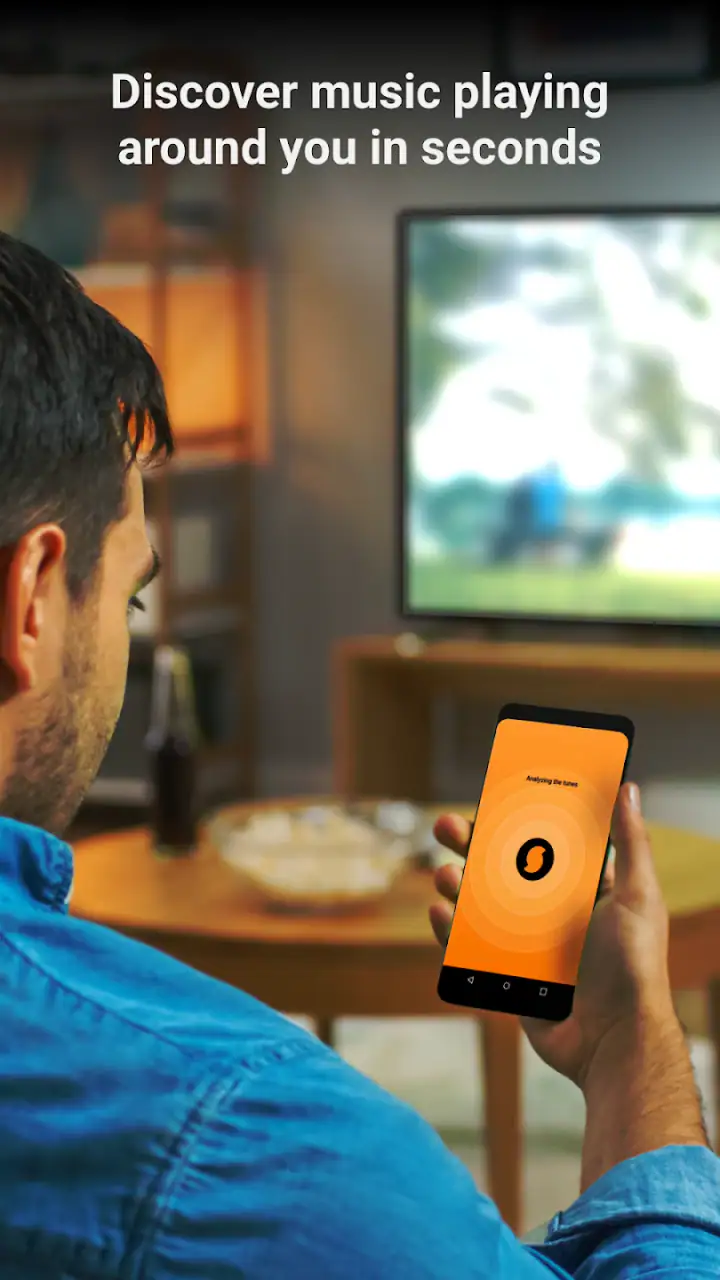
A useful first-week habit is to treat every recognition as a decision point. If I only need the title, I can leave after the result. If I like the song, I can use the discovery side to continue exploring. If it is something I may forget, I should save or otherwise organize it immediately rather than assuming I will remember the artist later. This makes the app more dependable because it turns spontaneous discoveries into a personal trail of music.
How it compares with familiar alternatives
Compared with a basic search engine, SoundHound is much better at handling music I cannot name. A search engine is excellent when I know a lyric, artist, or album, but it is not designed around recognizing an unknown recording from sound. Compared with a dedicated music player, SoundHound is more useful at the discovery stage, while a dedicated player may feel better for people who already have an established library and listening routine.
There is also a difference in purpose between SoundHound and a recommendation-heavy streaming service. A streaming service usually begins with music I already know or a playlist mood. SoundHound begins with a specific moment of curiosity. That makes it particularly good for turning accidental discoveries into intentional listening. If my main goal is offline listening, deep library management, or a single place for all playback, I would compare it carefully with the player I already use rather than assuming SoundHound should replace it.
What remains valuable after the first month
The month-to-month question is whether I still encounter enough unfamiliar music to justify keeping the app installed. For me, the answer depends on lifestyle. People who listen to radio, visit cafés, watch music-focused videos, attend social events, or frequently ask “what song is that?” can keep finding reasons to open it. Someone who listens almost exclusively to a fixed personal library may use it only occasionally.
The recurring value comes from accumulation. One recognition is useful; a growing record of discoveries is more useful. Over time, I can use those moments to refine what I listen to, revisit artists I had forgotten, and avoid the common problem of hearing a great track once and losing it forever. This is a quieter benefit than instant recognition, but it is the part that gives the app a chance to earn permanent space on a phone.
SoundHound’s store summary points to more than 300 million downloads, which underlines how broadly the product has traveled. Its average rating is around 3.7 from roughly 919 thousand ratings, so I would set expectations realistically: this is popular, but it is not universally loved. That feels consistent with an app whose usefulness depends heavily on listening conditions, personal music habits, and whether its extra player features fit into an existing setup.
The app is free to install, with in-app purchases ranging from $0.99 to $5.99 per item. That makes it easy to try without committing money first. I would spend only after deciding whether the free experience fits my routine. If I use recognition once every few months, paying for extras is unlikely to change the value equation. If I use it as a regular discovery notebook and voice-controlled listening tool, the decision becomes more reasonable, but it should still be based on actual use rather than the excitement of the first installation.
Three practical workflows that make it more useful
My first recommended workflow is the “capture now, sort later” approach. When I hear a song in a busy place, I identify it immediately and save the result before returning to the conversation or activity. Later, I can review the discoveries when I have time. This is more reliable than trying to remember a title, especially when several songs appear during the same day.
The second is to use it as a bridge between accidental discovery and deliberate exploration. After identifying a track, I would not stop at the title. I would look at the artist and related discovery options, then listen to one or two additional tracks rather than opening a completely separate search. This helps answer the more useful question: not only “what is this song?” but “is this artist worth following?”
The third is to separate recognition from long-term playback. SoundHound can help me discover and control music, but I do not need to force it to replace every other audio app. I can use it as the front door for unfamiliar songs and keep my usual player for the listening functions I already understand. That division reduces friction and prevents the app from becoming frustrating simply because I expected it to manage my entire music life.
A fourth, less obvious tip is to be selective about what deserves saving. If I record every passing song, the discovery list can become noisy and harder to revisit. I get more value when I keep tracks that I genuinely want to hear again and let one-off curiosities remain temporary. The app works best as a curated memory of musical discoveries, not as an unfiltered log of everything that happened to play nearby.
The maintenance burden is low, but not invisible
SoundHound does not demand the kind of daily maintenance associated with a large library or a complicated media-management system. I do not need to spend hours configuring it before it becomes useful. The main maintenance task is personal: deciding what to keep, what to revisit, and whether the app still fits my listening habits.
That simplicity is a strength, but it also means the long-term experience depends on my discipline. If I identify songs and never return to them, the app becomes a collection of forgotten moments. A short review session every few weeks can keep the discovery history meaningful. I might listen to a few saved tracks, remove the ones that no longer interest me, and follow the artists that genuinely stood out.
Updates matter as well. The current Android release is 10.5.6, and the minimum Android requirement of version 8.0 makes it accessible to many older devices. Even so, users with limited storage, older hardware, or a highly controlled phone setup should consider whether maintaining another music app is worthwhile. The app is easiest to justify when it fills a gap that existing search and playback tools do not cover.
The Teen age rating is another practical consideration for families. I would not interpret that label as a recommendation for unsupervised use by younger children. Parents should consider the wider music-discovery environment and whether a child is ready to navigate artist and song content independently.
Where fatigue can set in
The biggest source of fatigue is repetition. If I already know most of the music around me, the recognition feature has fewer opportunities to surprise me. An app built around discovery can feel unnecessary when my listening is tightly controlled or when I rarely encounter unfamiliar tracks.
Another possible frustration is the gap between identifying a song and actually enjoying it. Recognition answers a question, but it does not guarantee that the next step will be seamless. I may still prefer another service for playlists, subscriptions, or a carefully organized library. The more I expect SoundHound to replace those tools, the more likely I am to notice what it does not handle as naturally for my personal routine.
Voice control can also become tiring if I use it in situations where tapping would be faster. It is best treated as an optional shortcut, not a requirement. Likewise, discovery features can feel like extra browsing when I only wanted a title. The app needs to respect both types of user: the curious listener who wants to explore and the practical listener who wants an answer in a few seconds.
The rating of about 3.7 is worth keeping in mind before installation. I would not read it as a warning to avoid the app, but I would read it as a reason to test it in the places where I actually listen. A smooth result at home does not guarantee the same experience in a crowded venue, and a person who loves exploration may judge the app very differently from someone who wants a minimal identifier with no additional layers.
Who should keep it installed?
I think SoundHound is a strong fit for curious listeners who regularly encounter music outside their own playlists. It is especially appealing if I want one app to connect recognition, artist exploration, and voice-assisted playback. It also suits people who often discover songs in passing and need a dependable way to preserve those discoveries for later.
I would be more cautious if I already have a music-identification tool that I trust and a separate player that handles every listening need perfectly. In that situation, SoundHound may add overlap rather than value. I would also skip it if I rarely hear unknown music, dislike voice interaction, or want a strictly focused player with no discovery layer.
For new users, I recommend testing it across several real situations instead of judging it after one successful recognition. Try a quiet room, a moving environment, and a noisy public place. Then ask whether the follow-up discovery tools actually change what you listen to. The answer to that question matters more than the initial satisfaction of seeing a song title appear.
My long-term verdict
SoundHound earns lasting space on my phone when I use it as a music-discovery notebook and not merely as a novelty button. Its free entry point makes experimenting easy, its voice-controlled player gives it a practical angle, and its long presence in the category suggests a product with staying power. The developer, SoundHound Inc., has built something that can sit between accidental discovery and regular listening without demanding that I abandon every tool I already use.
It is not the best answer for everyone. A dedicated player may be better for organized listening, while a simpler identification tool may suit someone who wants only a fast title lookup. SoundHound’s value appears when those two needs overlap: I hear something unfamiliar, identify it, explore beyond the first result, and return to the discovery later.
My recommendation is to install it if unfamiliar music regularly catches your attention. Give it enough time to prove its month-to-month value, then keep only the parts that become habits. The lasting benefit is not the first recognition; it is turning forgotten musical moments into discoveries you can actually revisit.
FAQs for SoundHound - Music Discovery
What is SoundHound and how does it work?
SoundHound is a music discovery app that allows users to identify songs by listening to them. Simply tap the orange button while a song is playing, and the app will provide the song's title, artist, and album information. It also offers lyrics, artist bios, and live performance videos, enhancing your music experience.
Is SoundHound free to use?
SoundHound offers a free version with basic features like song identification and lyrics. However, it also has a premium version called SoundHound Infinity, which is ad-free and provides additional features. Users can choose to upgrade for a one-time fee to enjoy an uninterrupted experience.
Can SoundHound identify songs without an internet connection?
SoundHound requires an internet connection to identify songs as it needs to access its extensive music database online. However, you can use the app to save songs for identification later when you have access to the internet, ensuring you never miss a tune.
Does SoundHound support voice commands?
Yes, SoundHound supports voice commands through its "Hey SoundHound" feature. Users can ask questions about music, such as identifying a song or finding lyrics, and even control playback hands-free. This feature enhances user convenience, especially when multitasking or driving.
What additional features does SoundHound offer besides music identification?
Beyond music identification, SoundHound provides features like viewing lyrics in real-time, exploring artist bios, and watching music videos. The app also integrates with other services like Spotify and Apple Music, allowing users to create playlists or stream full songs directly from the app.
Pros
- Fast and accurate song identification.
- User-friendly and intuitive interface.
- Offline mode for music history access.
- Integration with Spotify and YouTube.
- Voice control feature for hands-free use.
Cons
- Occasional ads in free version.
- Limited features without premium upgrade.
- Requires internet for song identification.
- Some songs may not be recognized.
- Battery drain with extended use.


